Be yourself; Everyone else is already taken.
— Oscar Wilde.
This is the first post on my new blog. I’m just getting this new blog going, so stay tuned for more. Subscribe below to get notified when I post new updates.
Be yourself; Everyone else is already taken.
— Oscar Wilde.
This is the first post on my new blog. I’m just getting this new blog going, so stay tuned for more. Subscribe below to get notified when I post new updates.
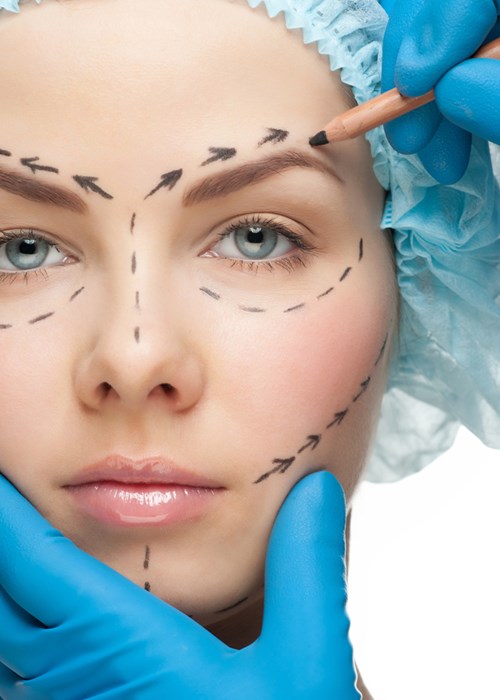
The definition of body modification is any alteration of the body and/or its appearance. There are many reasons that individuals choose to modify their bodies. Some of these reasons are cultural, religious, aesthetic reasons, or just a completely individual reason. One type of body modification is plastic surgery. Plastic surgery is a surgical procedure involving restoration, reconstruction, or alteration of a human body. There can be reconstruction surgery or cosmetic surgery. Plastic surgery is very different depending on what country you look at. Reasons that people get plastic surgery in China are way different and extreme than reasons people undergo it in western European countries. The individuals that tend to get the most plastic surgery are females, especially younger adult females.
Plastic Surgery in China
In China, 10 million people have undergone plastic surgery. 8.5 million of them are under the age of 30. Among the Asian-Pacific countries, China has one of the highest numbers of cosmetic surgeries and procedures. As mentioned before, reasons a person decides to get plastic surgery differ all of the time. But in China it is encouraged in a very different way. CNN interviewed Wu Xiaochen who is a 30 year old Chinese model and entrepreneur based in Beijing. She said that she was 14 years old when she got her first plastic surgery, a liposuction paid by her mother so she could get some fat reduced in her thighs. Now, 16 years later, Wu says she has had over 100 different cosmetics surgeries totaling of about $574,000 (or 4 million yuan). Wu now has two of her own beauty clinics in Beijing that offer cosmetic surgery.


A rising number of Chinese women are undergoing plastic surgery, seeking to emulate beauty standards inspired by Japanese manga comics, K Pop groups, and Western Culture. According to the Chinese Association of Plastics and Aesthetics, in 2014 it was estimated that more than 7 million people had plastic surgery done. Three years later, that number was estimated to be closer to 16.3 million. According to experts, they believe that this surge in plastic surgery is partly due to a series of apps called So-Young and GengMei. These apps allow potential patients to look at before and after photos of them after a specific surgery. These apps also allow individuals to book appointments right from the app. These new apps have taken over as directories for these cosmetic surgeries.
Many of the women in China that are undergoing these cosmetic surgeries are living in China’s second or third tier cities. More than half are under the age of 26. For the Gen Z population in China, plastic surgery gives them a way to stand out in the very large dating pool of that generation. Others believe “Being pretty is a way to ensure you will be successful at work and you will find a husband,” (Brenda Algre) Another reason that plastic surgery is becoming more popular is the spread of internet culture. There are many apps, such as Facetune, that allow users to remove and imperfections on their pictures before posting them on the internet. By doing this to their photos, people start to really dislike these imperfections and would rather just remove them.
Another type of app that is becoming more popular in China are apps that can actually match people with a plastic surgeon. GengMei and So-Young also have this function on them. These apps accomplish this by including reviews from past patients with their before and after pictures so you can see how well that specific surgeon is. GengMei also has a feature that “rates” patients out of 100 and will also give recommendations on what surgery that specific person should get.
Plastic Surgery in the United Kingdom

While plastic surgery in China is mainly facial reconstruction, plastic surgery in the United Kingdom is different. According to Bazaar, the three most popular plastic surgery procedures to get in the U.K are liposuction, breast implants, and then rhinoplasty. Not far behind them, there were also many inquiries about tummy tucks and breast lifts. It is believed the surge in rhinoplasties came from the fact that Prince Harry got engaged and married to Meghan Markle, and many were inspired to want their noses to become dainty like hers, since the royal family is a big influence there. There’s a huge difference in the tone of plastic surgery in the United Kingdom compared to China. For example, women (or men) in the U.K. do not start getting plastic surgery until a bit later in life compared to many women starting at 14-16 in China. There are also different societal reasons in these two countries for cosmetic surgery. Many in China believe that they need to be pretty in order get a job and find a husband. In the U.K., there is a desire to be “better looking” but many do not believe that their jobs depend on it. Also, there are definitely different ideals of aspiring beauty between the two countries. In China you see the women want daintier faces and smaller figures to look like women from anime or K-Pop. But in the U.K., you see them aspiring for more of a “Kardashian look”, the more curvier figures with enhancing breasts or the hips.
Sociological Analysis of Plastic Surgery
There are many other factors that play into and intersect with individuals deciding to get plastic surgery. There is a socioeconomic factor that plays into consideration here. Plastic surgery is expensive no matter what country you are in. So in reality only people of upper middle/higher classes are getting these cosmetic surgeries. This becomes an intersectional issue because as we saw, a majority of plastic surgery clients in both countries are women. This means that mostly higher income women are able to get these types of surgeries. This can create many negative impacts on women of lower income status. In both countries, women will feel the societal pressure of having to conform to whatever specific beauty standards there are, no matter what their income is. Lower income individuals have to feel that pressure to conform, but not be able to do anything about it because there is no way they they could afford plastic surgery.
We have learned throughout this course that there are many different ways that people get involved in deviant behavior. A lot of times people find themselves within a community of people that engage in a specific type of behavior. This is exactly the same way when you talk about getting plastic surgery. Almost everyone has something that they do not like or would change about themself. That is normal. What is different from the norm is actually going and getting that thing changed or removed through plastic surgery. In order for people to seriously consider getting plastic surgery, they see what it has done for other people who have gotten it done. As you see through the apps in China, seeing it first hand for themselves or reading other people’s reviews of a plastic surgery will more likely make a person go through with the surgery than if they did not see any of that stuff. This creates a community of these individuals that either already have gotten the surgery, or they want to look into getting it.
Works Cited
Becker, Howard Saul. Outsiders: Studies in the Sociology of Deviance. Free Press, an Imprint of Simon & Schuster, Inc., 2018.
Chinese Association Of Plastics And Aesthetics, http://www.cpdglobal.org/capatest/index.html.
Clinard, Marshall B. Sociology of Deviant Behavior. Cengage, 2019.
Furnham, Adrian, and James Levitas. “Factors That Motivate People to Undergo Cosmetic Surgery.” Plastic Surgery, vol. 20, no. 04, 2012, doi:10.4172/plastic-surgery.1000777.
Goffman, Erving. Stigma. Alexander Street Press.
Goode, Erich. “Explaining Deviant Behavior.” Deviant Behavior, 2019, pp. 28–55., doi:10.4324/9780429202902-2.
Nassab, R., and P. Harris. “Cosmetic Surgery Growth and Correlations With Financial Indices: A Comparative Study of the United Kingdom and United States From 2002-2011.” Aesthetic Surgery Journal, vol. 33, no. 4, Dec. 2013, pp. 604–608., doi:10.1177/1090820×13481972.
Thompson, Beverly Yuen. Covered in Ink: Tattoos, Women, and the Politics of the Body. New York University Press, 2015.
Zaugg, Julie, and Natalie Leung. “China Cosmetic Surgery Apps: Swipe to Buy a New Face.” CNN, Cable News Network, 3 Mar. 2020, http://www.cnn.com/style/article/cosmetic-surgery-apps-china-intl-hnk/index.html.
Heroin is a highly addictive drug that is processed from morphine, which is a naturally occuring substance. When heroin is injected into the body, the user experiences a “rush” This rush is accompanied by a warm flush of the skin, dry mouth and heaviness within the extremities. After the rush slows, users will feel drowsy for several hours, their mental capacity is impaired, and both heart rate and breathing will slow. These side effects can sometimes be life threatening (National).
When a person abuses any drug, the consequences are painful. They can lose friends and family if they become dependent on the drug or even hurt themselves. Heroin is no exception. Trying to break a heroin addiction is among the hardest of any drugs, even prescription painkillers. Withdrawal from heroin is often way more intense than withdrawal from painkillers. Withdrawal symptoms from heroin come fast, because it leaves the body relatively quick. Users can experience withdrawal as fast as six hours after their last use. These side effects can last for up to a week, which is why it is hard to stop abusing heroin without professional help (Heroin).
I decided to look into the drug policy of heroin because in my county (Fulton County, NY) we have a heroin problem. I have a police scanner in my house and at least once or twice a day we hear reports of a possible overdose. In a report from a local news station, in 2017 it had been reported that heroin deaths in Fulton County had increased 700% since 2015 (Mc Cloy).
In New York State, possession or sale of a controlled substance, such as heroin, is a felony. Unless if it is found to be in the seventh degree, then it is considered a class A misdemeanor (NY). I cannot find a specific statistic for the percentage of inmates in New York that are in there on specifically a charge related to heroin, but I do know that drug charges make up a majority of inmates. The most successful treatment for heroin addicts is known as Medically Assisted Treatment (MAT) which is treatment where you give users drugs that can combat symptoms of withdrawal, such as methadone. In New York, the only facilities that offer MAT are the jail systems in NYC or at the correctional facility in Elmira County. Everywhere else in the state, these recovering users get no help. This is detrimental because without the help they need, when the prisoners get released from jail they are most likely to relapse within two weeks of release. This relapse can often be deadly because they will try a dose their bodies are no longer used to (Horn).
In Connecticut however, MAT is available at their state prisons. Their laws and punishments for heroin are slightly different than New York’s. For a first time offense, if a person is found in possession of heroin they can be sentenced up to 7 years in prison and fined up to $50,000. The punishment becomes worse for repeating offenders. If you are found selling heroin, there’s a minimum sentence of 5-20 years with a possibility of spending life in prison (Norman-Eady). These sentencing are a bit more harsh than NY, but they offer MAT so they at least try to help these drug users to be able to lead a somewhat normal life after prison.
The institutions that control the power in both states are the state governments and jail systems. One state decides to try and help their inmates recover while in jail, the other just puts them in jail with little to no help on recovering from their addiction. What happens to inmates during their time in jail dictates what will happen to them immediately following their release. The type of people that typically engage in this drug are people from lower socioeconomic classes.
Since it is obvious that this drug is illegal, why do people decide to engage in this type of behavior? As Becker says in Chapter 7, “… the existence of a rule does not automatically guarantee that it will be enforced,” (121). While police do indeed enforce the prosecution when they do find people in possession of this drug, a lot of it happens behind closed doors where police will never find it and they do not have policies in place in order to completely crack down on this type of behavior.
Discussion Question:
Why do you think people get caught up in this type of deviance? Do you think it happens because they somehow become involved in a community of people engaging in this deviance or do you think something else pulls them to try this drug?
Works Cited
Becker, Howard Saul. Outsiders: Studies in the Sociology of Deviance. Free Press, an Imprint of Simon & Schuster, Inc., 2018.
“Heroin Withdrawal and Detox.” Addiction Center, http://www.addictioncenter.com/drugs/heroin/withdrawal-detox/.
Horn, Steve. “Opioid Epidemic Impacts Prisons and Jails: Prison Legal News.” Opioid Epidemic Impacts Prisons and Jails | Prison Legal News, http://www.prisonlegalnews.org/news/2019/sep/5/opioid-epidemic-impacts-prisons-and-jails/.
McCloy, Anne. “Only on 6: Dramatic Increase in Heroin, Fentanyl Related Deaths in One Local County.” WRGB, WRGB, 10 Oct. 2017, cbs6albany.com/news/local/only-on-6-dramatic-increase-in-heroin-fentanyl-related-deaths-in-one-local-county.
National Institute on Drug Abuse. “What Are the Immediate (Short-Term) Effects of Heroin Use?” NIDA, http://www.drugabuse.gov/publications/research-reports/heroin/what-are-immediate-short-term-effects-heroin-use.
Norman-Eady, Sandra. Penalties for Illegal Drug Sale and Possession Crimes, http://www.cga.ct.gov/PS98/rpt\olr\htm/98-R-1003.htm.
“NY Laws.” Article 220 | NY Penal Law | Controlled Substances Offenses, ypdcrime.com/penal.law/article220.htm.
The example of sex work that I will be discussing is prostitution/escorts, mostly women. I will be contrasting this specific work in different countries and across different socioeconomic statuses.

The first point I will be talking about is attitudes of the women within this field. Many of these women support each other mentally and emotionally. These women all have a mutual understanding of why they chose this way of life or why they have to do it for different reasons, such as financial reasons. This makes me think of how in chapter 6 of Camming, Jones states “I’ve come into contact with so many like-minded people…” (142). When individuals that do these controversial jobs come together, they all know what it is like to be in this field so they know how to be better friends to each other when the society around them wants to tear them down.
There are many different ways prostitution is viewed in the United States. According to HG.org, “…many people feel prostitution is a victimless crime, only made dangerous as a result of its unregulated status and the fact that prostitutes cannot turn to authorities for help when exposed to violence or other criminal acts.” While others think that “…the prostitutes themselves are often the victims…”.
In the United States, almost always the demographic in charge is the male, especially when you look at women who are escorts. The institution that is in charge is the government, considering that prositution is illegal almost everywhere in the country. This fact causes many prostitutes not to report any violence that happens to them because they are afraid of their own sake and that by reporting it they would get themselves in trouble as well. A good representation of this is the television show Law and Order:SVU. There are countless different episodes that show how scared escorts are to report a sexual assault because that would involve outing themself to a jury or scared that people think they deserved it because they are prostitues.


Prostitution in the Middle East is much different than it is in the United States. For example, prostitution is legal in the country of Tunisia. Many people view the Middle East as very conservative and that there is a very strict government, but it is surprising to find out that porn is just as common there as it is in the United States. Many women during the Iraq War had to work as prostitutes in order to make ends meet. Many of them were poor refugee women that fled into Syria because of the United States invasion.
One similarity between prostitution in the Middle East and the United States is that women tend to turn toward this line of work when they are in financial trouble and see no other way to get out of it. Also similarly to the United States, this is a male dominated field. “The local women in Damascus working as prostitutes were forever complaining in my conversations with them about how these Iraqis were bad for business, because they charged less than the going rate,” (salon). No matter what these women have to rely on the men in order to make their living. Another similarity is how the institution in charge is the government. Even though prostitution is legal in Tunisia, it is illegal in Iraq and Syria so these women are also risking their safety from the government in order to work.
Question:
Before this week’s assignment did you realize how extensive and potentially rewarding the sex work industry could be?
Works Cited
Clark-Flory, Tracy. “Unveiling the Middle East’s Sex Industry.” Salon, Salon.com, 27 Sept. 2010, http://www.salon.com/2010/09/27/bradley_qa/.
Hg.org, http://www.hg.org/legal-articles/prostitution-in-the-united-states-30997.
Jones, Angela. Camming: Money, Power, and Pleasure in the Sex Work Industry. New York University Press, 2020.
:max_bytes(150000):strip_icc()/Erving_Goffman-58b88d815f9b58af5c2da940-5c3e591246e0fb000186ed5f.jpg)
Erving Goffman is a sociologist that developed the idea of dramaturgy. This is known as the idea that life is a never ending play and people are all actors in it. Goffman describes different concepts of dramaturgy known as a “front stage” and a “back stage”. He uses these terms to describe human social interaction. Front stage actions are ones that everyone in an individual’s life can see, also known as an “audience”. This is the stage that most of the people spend their time in. The backstage actions are the ones that happen behind closed doors. This is the time that people are their truest self and where they do not have to act.

There are many different individuals who engage in these concepts. One example is a teacher or a professor. A teacher will put on a major act when he or she is in front of their students. There are certain things that they can not talk about, they have to wear a certain style of dress, present themselves in an appropriate way. They can not act like their true self in front of the students, so here they are engaging in the front stage.

The institution of education displays power over these teachers engaging in the front stage by firing them or writing them up if they do not follow these expectations. An example of this is a teacher from Atlanta, Georgia named Patrice Brown getting fired from school for wearing a dress that was “too tight”, but in reality she was more being sexualized by the community for being curvy. There are also some critiques that if a white woman wore this kind of dress to school that she would not have been dealt the same consequences as Brown was. Unfortunately there are numerous different stories almost exactly like this one, but only affecting people of color.
There is a certain middle ground that these individuals engage in. While Goffman does not really talk about this part it does happen. When teachers or professors get in groups with each other, they do not have to put on as much of an act for each other, but there are still certain expectations of them that they must adhere to. For example, teachers will often talk about teaching with each other, such as certain methods or how their students are. They can’t really talk about much they do outside of teaching, even if it is something they really enjoy, because it might be considered not right for a teacher to do. An example of this is a teacher going out clubbing every weekend. Many of their colleagues or bosses would see this as inappropriate for a teacher to do, so they have to keep it hidden from everyone at work.
A teacher’s backstage would be everything that they do when they are not at their school. At their home behind closed doors is where they are their truest self. There are no expectations or requirements of them as a teacher here. They can lounge around, go clubbing, smoke, or whatever else they may like. The teachers act so much differently in this backstage than they do around students or around other faculty. They do not have to act at all during this stage.
I found that the average age of public school teachers in the United States is 42.4. In 2015-2016 80% of public school teachers were white, and in the same school year 64% were females. These demographics may or may not have an effect as to how teachers act outside of class, but there were no definitive studies that I could find that talk about this type of information.
I found a website that lays out certain rules and expectations that this certain district had for their teachers and a lot of the rules seem like they’re meant for children and not for grown adults. Every single rule starts with “I will…”. For example one of the rules is “I practice active listening with all members of the HPHS community.”, you would think you would have to tell a preschooler that, not someone who will be teaching the four year old. I will have a link to all of the rules below, I just found it very interesting that they decided to word them like this.
This website also does not really talk about exactly how teachers should present themselves when they are outside of the school. All it says is that they should respect the guidelines of their school district. Yet from personal experience, since graduating high school I have seen how different these teachers act around you even after only being out of that school for one year. It makes me wonder if it is an underlying theme in their education that makes them act so differently outside of school. There might be seminars or workshops in their education, such as grad school, where they give what is appropriate or not appropriate to do in a classroom. I also wonder if it is the fear of being labeled as a “deviant” within their place of work that makes their front stage so much different than their back stage.
These different stages can have a social impact on these individuals. Since they spend so much of their days engaging in the front stage act, they may feel like a fake. Having to spend days acting like someone they are not. They much rather prefer being themselves at all time but their profession does not allow it. Unfortunately this is the case for almost all professions. There are certain expectations tied to a title and you must act these out or you will not be able to keep the job. The important thing for these individuals is that they have groups of people that they engage in these different stages around them and that they all know that they have it in common.
Works Cited
“High School For Health Professions & Human Services.” Expectations for Staff – Teacher – High School For Health Professions & Human Services, http://www.hphsnyc.org/apps/pages/index.jsp?uREC_ID=246466&type=d&pREC_ID=568676.
“Schools and Staffing Survey (SASS).” National Center for Education Statistics (NCES) Home Page, a Part of the U.S. Department of Education, nces.ed.gov/surveys/sass/tables/sass1112_2013314_t1s_002.asp.
The Condition of Education – Preprimary, Elementary, and Secondary Education – Teachers and Staff – Characteristics of Public School Teachers – Indicator April (2018), nces.ed.gov/programs/coe/indicator_clr.asp.
TheGrio. “The Curvy ‘Teacher’ Who Went Viral for Dressing Sexy Has Been Reprimanded.” TheGrio, TheGrio, 15 Sept. 2016, thegrio.com/2016/09/14/the-curvy-teacher-who-went-viral-for-dressing-sexy-has-been-reprimanded/.


My name is Alison Trajlinek. I am a sophomore psychology major with minors in forensics and criminal justice. I come from a small town in upstate New York called Johnstown. I knew every person I graduated high school with. I consider myself to be pretty reserved around new people, but when I become comfortable I bloom. Outside of classes I work at a Dunkin Donuts near campus and at home I work at a supermarket. When I am not in class or at work you can typically find me hanging out with my boyfriend, missing my cat, or streaming movies or shows online.

I am the first person in my immediate family to attend college, so everything about my college experience has been so foreign to me and my parents. I sometimes feel that the odds are against me in comparison to my peers. But I guess I wouldn’t be wrong since first generation students graduation rates are lower than second or third generation college students.
My parents and maternal grandparents have never gotten a divorce. My parents have been married for 23 years and my grandparents have been for 40 years. Even though the divorce rate has gone down in the past decade, I feel like growing up around them makes me a deviant, especially when I was in high school. In high school only two of my friends had parents that either were not divorced or were not in the middle of a divorce. This really shaped a big part of me growing up, I value having my parents together way more than I would have if I did not see how divorce affected my friends.
In the novel Outsiders, Becker defines deviance as “…anything that varies too widely from the average,” (pg 4). I agree with this definition as well. It made me think of my own life because I happen to be left handed and considering that only 10% of the population are left handed, that strays way far from the average. A lot of people do not realize how much of a struggle it is to be left handed. I have to go to classes on the first day much earlier to find the one or two left handed seats that are in the classroom. Sitting at restaurants is always a challenge because I need to be on the end in order to avoid my arm colliding with the person sitting next to me.
When I was younger, my father introduced me to the sci-fi world called “Star Wars“. I then became absolutely obsessed with it, but the other kids at school said that since I was a girl that I shouldn’t like Star Wars because it was more of a boy thing. This annoyed me but I didn’t let it stop me from enjoying it. As Becker says, “…deviance is the failure to obey the rules,” (8) so if liking Star Wars has made me a deviant, I am proud of it.
Majoring in psychology is relatively new to me due to me changing my major recently. I am excited but also nervous about this change. There is kind of a negative connotation around changing my major, at least in my life. But it is normal for college students to change their major considering 80% of college students end up changing their major at some point in their college career. Psychology has proven to be more versatile than I first originally thought. As in The Sociological Imagination, it states “…the social sciences are becoming the common denominator of our cultural period…” (13). Social sciences such as psychology are becoming more accepted in our culture and I think that is great for social science majors ready to go out into the world.
Works Cited
Becker, Howard Saul. Outsiders; Studies in the Sociology of Deviance. London: Free Press of Glencoe, 1963.
This is an example post, originally published as part of Blogging University. Enroll in one of our ten programs, and start your blog right.
You’re going to publish a post today. Don’t worry about how your blog looks. Don’t worry if you haven’t given it a name yet, or you’re feeling overwhelmed. Just click the “New Post” button, and tell us why you’re here.
Why do this?
The post can be short or long, a personal intro to your life or a bloggy mission statement, a manifesto for the future or a simple outline of your the types of things you hope to publish.
To help you get started, here are a few questions:
You’re not locked into any of this; one of the wonderful things about blogs is how they constantly evolve as we learn, grow, and interact with one another — but it’s good to know where and why you started, and articulating your goals may just give you a few other post ideas.
Can’t think how to get started? Just write the first thing that pops into your head. Anne Lamott, author of a book on writing we love, says that you need to give yourself permission to write a “crappy first draft”. Anne makes a great point — just start writing, and worry about editing it later.
When you’re ready to publish, give your post three to five tags that describe your blog’s focus — writing, photography, fiction, parenting, food, cars, movies, sports, whatever. These tags will help others who care about your topics find you in the Reader. Make sure one of the tags is “zerotohero,” so other new bloggers can find you, too.
Have a WordPress.com account? Log in now.

