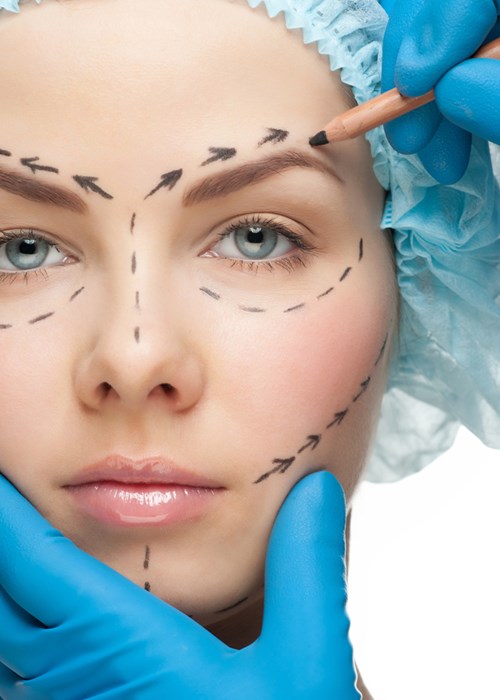
The definition of body modification is any alteration of the body and/or its appearance. There are many reasons that individuals choose to modify their bodies. Some of these reasons are cultural, religious, aesthetic reasons, or just a completely individual reason. One type of body modification is plastic surgery. Plastic surgery is a surgical procedure involving restoration, reconstruction, or alteration of a human body. There can be reconstruction surgery or cosmetic surgery. Plastic surgery is very different depending on what country you look at. Reasons that people get plastic surgery in China are way different and extreme than reasons people undergo it in western European countries. The individuals that tend to get the most plastic surgery are females, especially younger adult females.
Plastic Surgery in China
In China, 10 million people have undergone plastic surgery. 8.5 million of them are under the age of 30. Among the Asian-Pacific countries, China has one of the highest numbers of cosmetic surgeries and procedures. As mentioned before, reasons a person decides to get plastic surgery differ all of the time. But in China it is encouraged in a very different way. CNN interviewed Wu Xiaochen who is a 30 year old Chinese model and entrepreneur based in Beijing. She said that she was 14 years old when she got her first plastic surgery, a liposuction paid by her mother so she could get some fat reduced in her thighs. Now, 16 years later, Wu says she has had over 100 different cosmetics surgeries totaling of about $574,000 (or 4 million yuan). Wu now has two of her own beauty clinics in Beijing that offer cosmetic surgery.


A rising number of Chinese women are undergoing plastic surgery, seeking to emulate beauty standards inspired by Japanese manga comics, K Pop groups, and Western Culture. According to the Chinese Association of Plastics and Aesthetics, in 2014 it was estimated that more than 7 million people had plastic surgery done. Three years later, that number was estimated to be closer to 16.3 million. According to experts, they believe that this surge in plastic surgery is partly due to a series of apps called So-Young and GengMei. These apps allow potential patients to look at before and after photos of them after a specific surgery. These apps also allow individuals to book appointments right from the app. These new apps have taken over as directories for these cosmetic surgeries.
Many of the women in China that are undergoing these cosmetic surgeries are living in China’s second or third tier cities. More than half are under the age of 26. For the Gen Z population in China, plastic surgery gives them a way to stand out in the very large dating pool of that generation. Others believe “Being pretty is a way to ensure you will be successful at work and you will find a husband,” (Brenda Algre) Another reason that plastic surgery is becoming more popular is the spread of internet culture. There are many apps, such as Facetune, that allow users to remove and imperfections on their pictures before posting them on the internet. By doing this to their photos, people start to really dislike these imperfections and would rather just remove them.
Another type of app that is becoming more popular in China are apps that can actually match people with a plastic surgeon. GengMei and So-Young also have this function on them. These apps accomplish this by including reviews from past patients with their before and after pictures so you can see how well that specific surgeon is. GengMei also has a feature that “rates” patients out of 100 and will also give recommendations on what surgery that specific person should get.
Plastic Surgery in the United Kingdom

While plastic surgery in China is mainly facial reconstruction, plastic surgery in the United Kingdom is different. According to Bazaar, the three most popular plastic surgery procedures to get in the U.K are liposuction, breast implants, and then rhinoplasty. Not far behind them, there were also many inquiries about tummy tucks and breast lifts. It is believed the surge in rhinoplasties came from the fact that Prince Harry got engaged and married to Meghan Markle, and many were inspired to want their noses to become dainty like hers, since the royal family is a big influence there. There’s a huge difference in the tone of plastic surgery in the United Kingdom compared to China. For example, women (or men) in the U.K. do not start getting plastic surgery until a bit later in life compared to many women starting at 14-16 in China. There are also different societal reasons in these two countries for cosmetic surgery. Many in China believe that they need to be pretty in order get a job and find a husband. In the U.K., there is a desire to be “better looking” but many do not believe that their jobs depend on it. Also, there are definitely different ideals of aspiring beauty between the two countries. In China you see the women want daintier faces and smaller figures to look like women from anime or K-Pop. But in the U.K., you see them aspiring for more of a “Kardashian look”, the more curvier figures with enhancing breasts or the hips.
Sociological Analysis of Plastic Surgery
There are many other factors that play into and intersect with individuals deciding to get plastic surgery. There is a socioeconomic factor that plays into consideration here. Plastic surgery is expensive no matter what country you are in. So in reality only people of upper middle/higher classes are getting these cosmetic surgeries. This becomes an intersectional issue because as we saw, a majority of plastic surgery clients in both countries are women. This means that mostly higher income women are able to get these types of surgeries. This can create many negative impacts on women of lower income status. In both countries, women will feel the societal pressure of having to conform to whatever specific beauty standards there are, no matter what their income is. Lower income individuals have to feel that pressure to conform, but not be able to do anything about it because there is no way they they could afford plastic surgery.
We have learned throughout this course that there are many different ways that people get involved in deviant behavior. A lot of times people find themselves within a community of people that engage in a specific type of behavior. This is exactly the same way when you talk about getting plastic surgery. Almost everyone has something that they do not like or would change about themself. That is normal. What is different from the norm is actually going and getting that thing changed or removed through plastic surgery. In order for people to seriously consider getting plastic surgery, they see what it has done for other people who have gotten it done. As you see through the apps in China, seeing it first hand for themselves or reading other people’s reviews of a plastic surgery will more likely make a person go through with the surgery than if they did not see any of that stuff. This creates a community of these individuals that either already have gotten the surgery, or they want to look into getting it.
Works Cited
Becker, Howard Saul. Outsiders: Studies in the Sociology of Deviance. Free Press, an Imprint of Simon & Schuster, Inc., 2018.
Chinese Association Of Plastics And Aesthetics, http://www.cpdglobal.org/capatest/index.html.
Clinard, Marshall B. Sociology of Deviant Behavior. Cengage, 2019.
Furnham, Adrian, and James Levitas. “Factors That Motivate People to Undergo Cosmetic Surgery.” Plastic Surgery, vol. 20, no. 04, 2012, doi:10.4172/plastic-surgery.1000777.
Goffman, Erving. Stigma. Alexander Street Press.
Goode, Erich. “Explaining Deviant Behavior.” Deviant Behavior, 2019, pp. 28–55., doi:10.4324/9780429202902-2.
Nassab, R., and P. Harris. “Cosmetic Surgery Growth and Correlations With Financial Indices: A Comparative Study of the United Kingdom and United States From 2002-2011.” Aesthetic Surgery Journal, vol. 33, no. 4, Dec. 2013, pp. 604–608., doi:10.1177/1090820×13481972.
Thompson, Beverly Yuen. Covered in Ink: Tattoos, Women, and the Politics of the Body. New York University Press, 2015.
Zaugg, Julie, and Natalie Leung. “China Cosmetic Surgery Apps: Swipe to Buy a New Face.” CNN, Cable News Network, 3 Mar. 2020, http://www.cnn.com/style/article/cosmetic-surgery-apps-china-intl-hnk/index.html.

